 .
. 
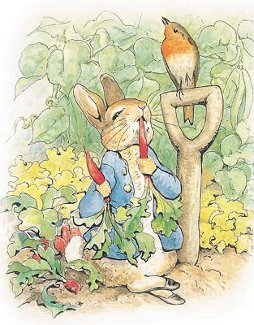
about Flopsy, Mopsy, and Peter Rabbit. And Mittens, Moppet, and Tom Kitten
that we read as children. Or perhaps we read them to our children. And enjoyed
the illustrations. Not just the playful animals but the world in which they lived.
.
All content included on this site such as text, graphics and images is protected by U.S and international copyright law.
The compilation of all content on this site is the exclusive property of the site copyright holder.
Beatrix Potter's Botanical, a book review
Sunday, 20 September 2026
Do you remember the charming short little stories by Beatrix Potter
.
about Flopsy, Mopsy, and Peter Rabbit. And Mittens, Moppet, and Tom Kitten
that we read as children. Or perhaps we read them to our children. And enjoyed
the illustrations. Not just the playful animals but the world in which they lived.
A number of years ago author Marta McDowell wrote "Beatrix Potter's Gardening Life: The Plants and Places That Inspired the Classic Children's Tales" Both author and subject are back this year with
Beatrix Potter's Botanical, The Art of Flowers and Fungi
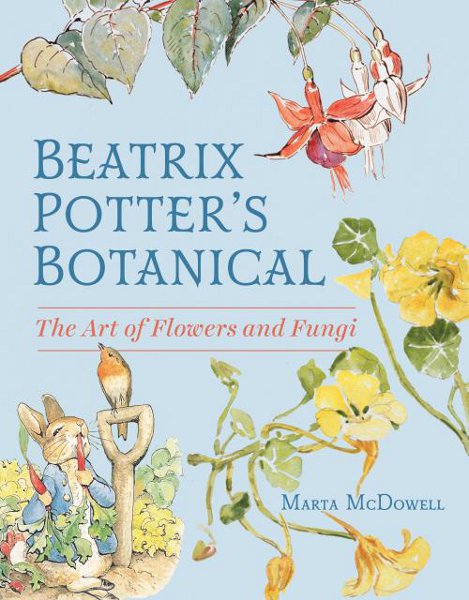
exploreing 65 of the plants and fungi that are so much a backdrop
to these stories, precisely captured in her accurate botanical drawings.
.
To begin, first this delightful book introduces us to the woman who shares her love of the natural world and her imaginative little animals in her stories. Family pictures of the young girl, growing into a young woman, a wedding picture. With her little dogs. And description of her farms, the Herdwick sheep she cherished, the flower and kitchen gardens. This preface ends with a few sentences sharing the information that she left over 4,000 acres to the National Trust, protecting her beloved Lake district and the farms. And Hill Top house, which visitors may see today, with furnishings, collections, and nooks that appeared in many of her stories.
This is not a book about botany, with technical discussion about classification, where each plant originated, annual / perennial / herbaceous / other. It is an exploration of Beatrix Potter's fascination with each plant and her development as an artist, from a young age and into maturity. For example, there are just a few pages with discussion of white water lilies (with a diversion into boy scouts invited to come for "scrumping" apples), a half page illustration of water lilies. And a full page illustration of Mr. Jeremy Fisher being pulled into a pond, with water lilies.
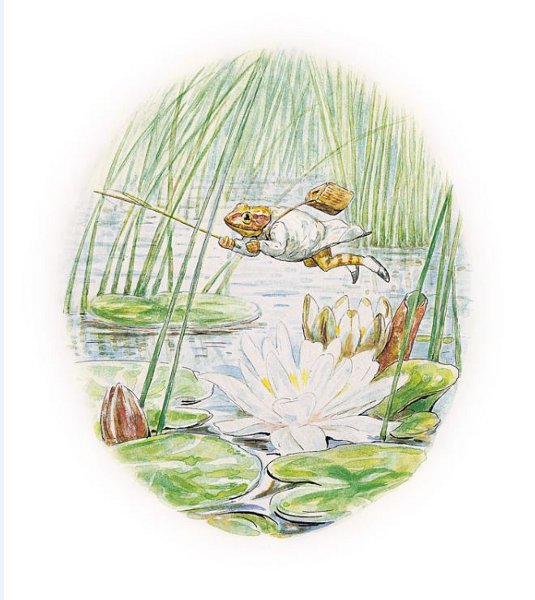
image copyright Frederick Warne & Co. Ltd 1907, 2002
The charming illustration of bramble berries and currants accompanies a sad story of Beatrix Potter's first romance, frowned on by her parents. Why? They considered the man, youngest son of her publisher, to be of a lower social stratum. Not the text typically found in a book of botany, but something that brings her to the reader as a real person.
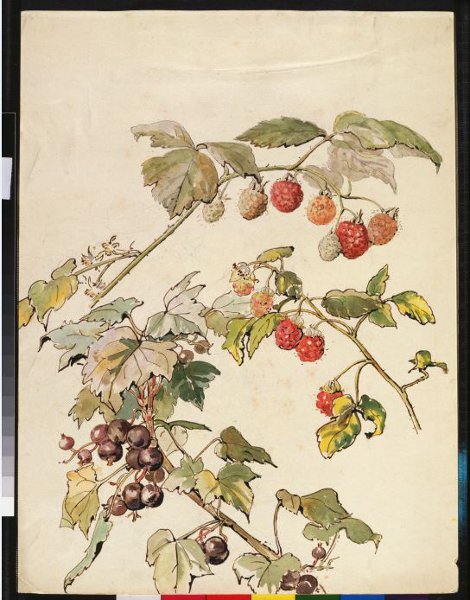
copyright Linder Collection, 2018
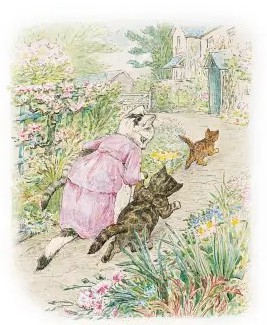
This botanical begins its alphabet with Apple. There's mention of her aunt and uncle's
estate in Wales, with "old grey apple trees on wooden espalliers." And surely enough,
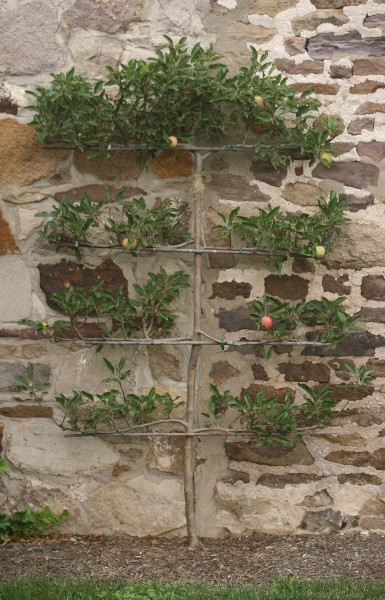
in The Tale of Tom Kitten published in 1907, in the background of an illustration
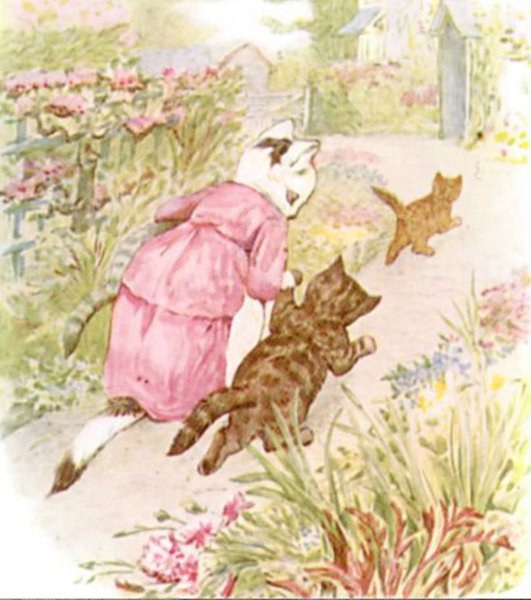
image copyright Frederick Warne & Co. Ltd 1907, 2002
on a brick wall there is an espallier fruit tree in flower with its spring time blossoms.
Beatrix Potter wrote her charming stories, first in letters to young relatives that were so well received that she was encouraged to publish. Her art began as a personal interest that grew into accurate depictions of plants and also morphed into illustrations for her stories.
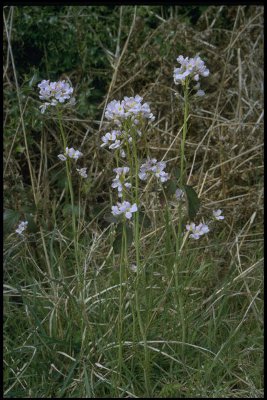
Let us compare, contrast, consider the differences between living plant, dried specimen
 .
.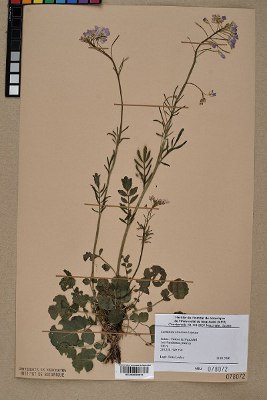
image courtesy rhs.org.uk/ all rights reserved.image courtesy Neuchâtel Herbarium, all rights reserved
Flowers grow. The seasons turn. Flowers fade. They might be preserved as a flattened and dried specimen
the herbarium sheet of a cuckoo flower. Compare the evocative capture of the soul of a flower with art.
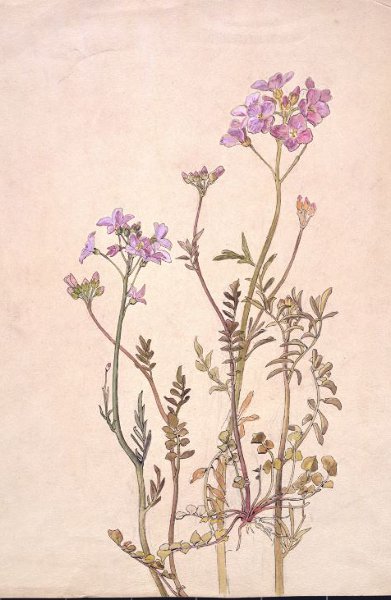
image courtesy Frederick Warne & Co. Ltd. all rights reserved
Cuckoo flower, Cardamine pratensis. pratensis the Latin for "from/of the meadow" and common name of cuckoo flower because it blooms around the same time as the first cuckoos arrive each spring in the British Isles.
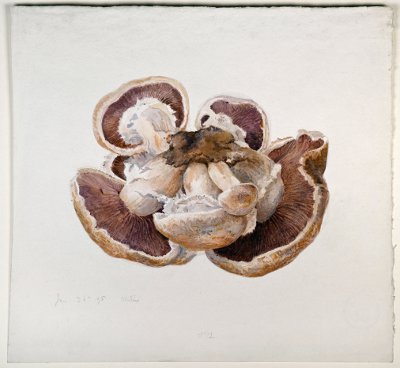
Her illustrations of the natural world she so enjoyed were accurate depictions of flowers and fungi. She was happy to observe and paint from nature in the wild, and even from the grocer.
 .
.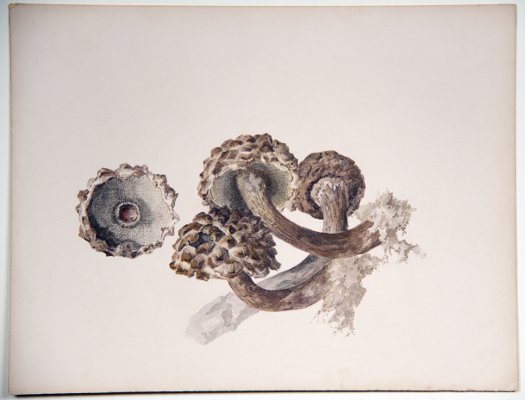
copyright The Armit Trust
The horse mushrooms in the illustration on the left came from Slaters, a London provisioner.
While on a visit to Scotland she discovered old man of the woods, rarely seen in Britain.
With delight, Beatrix Potter combined the natural world she observed with the imaginative stores about kittens, rabbits, hedgehogs and more. Reading Beatrix Potter's Botanical, The Art of Flowers and Fungi takes the reader into her world. It would have been a pleasure join her for a ramble in meadows and woodlands. This charming book must serve instead.
To bring the appeal of her stories home, yourself, think about growing some of her favorite plants, yourself.
Beatrix Potter's Botanical, The Art of Flowers and Fungi
Marta McDowell
Timber Press, Workman Publishing, Hachette Book Group Inc.
ISBN 978-1-64326-485-1, Hardcover, $30.00
On sale October 13, 2026
If you have any comments or questions, you can e-mail me: jgglatt@gmail.com
Back to September
Back to the main Diary Page